

Basics of Waterborne Diseases
Water-borne diseases are any illness caused by drinking water contaminated by human or animal feces, containing pathogenic microorganisms. Over the past decades, the picture of water-related human health issues has become increasingly complex, with the rise of new water-related infectious diseases and the re-emergence of ones already known, such as salmonellosis, cholera, shigellosis, malaria, schistosomiasis or modern infections such as legionellosis or SARS. There is still lots of work to be done to protect human health worldwide.
Water Related Diseases
| Armenia | Arsenicosis |
| Ascariasis | Botulism |
| Campylobacteriosis | Cryptosporiodiosis |
| Cyanobacterial toxins | Dengue |
| Diarrhoea | Dracunculiasis |
| Fluorosis | Giardiasis |
| Hepatitis | Hookworm infection |
| Japanese encephalitis | Lead poisoning |
| Legionellosis | Leptospirosis |
| Lymphatic filariasis | Malaria |
| Malnutrition | Methaemoglobinemia |
| Onchocerciasis | Polio |
| Ring Worm or Tinea | Scabies |
| Schistomiasis | Trachoma |
| Trichuriasis | Typhoid |
Dimension of the Problem
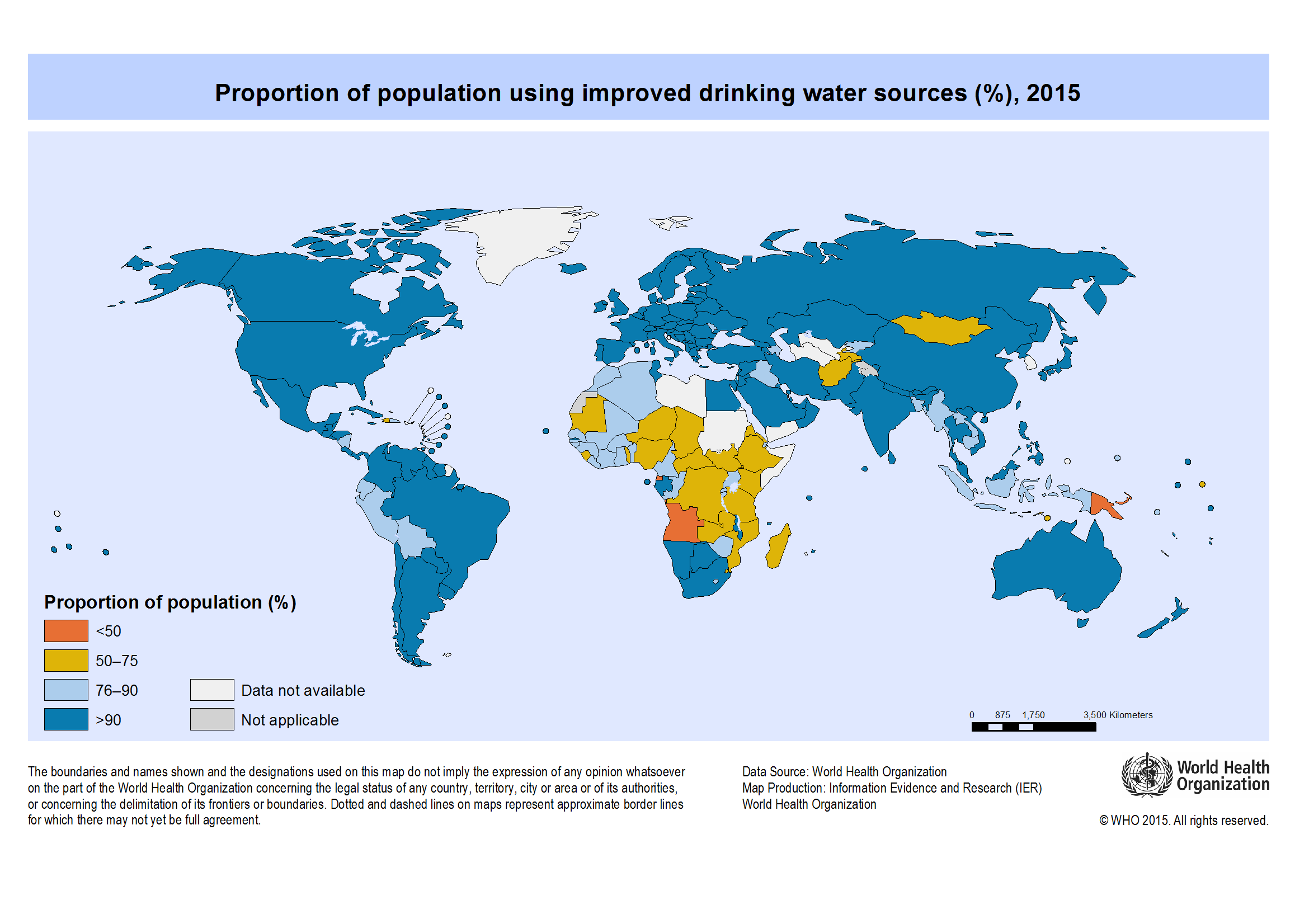
In third world countries four-fifths of all the illnesses are caused by water-borne diseases, with diarrhea being the leading cause of childhood death.
The global picture of water and health has a strong local dimension with the following: Image courtesy World Health Organization.